Electro Magnetic Pulse
Electro Magnetic Pulse (E.M.P)
Then and Now - better or worse ?
Throughout the whole of human history , electromagnetic effects must have taken place, due to solar storms and other "weather" on the sun. Humans are not directly affected by an E.M.P. , nor is your animal skin cloak or flint axe. It was not until a level of society was reached which was increasingly reliant on electrical and electromagnetic effects that such solar weather became a problem.
A large solar flare could disrupt electrical supplies, radio transmission and even destroy electrical and electronic equipment .
Human beings would weaponise a rainy day, if it sounded like a handy thing to have , so the E.M.P. weapon was born !
Imagine a situation where , to add insult to injury , an aggressor has not only launched a nuclear attack but has slyly detonated a specifically designed device at high atmosphere altitude and now NOTHING works , and will never work again. (Now, where did I put that flint axe ?)
Why even bother with the Nukes at all, when you can literally E.M.P. your opponent back to the Stone Age with a few cunningly positioned high altitude devices ?
An interesting idea, would you rather be nuked into the wide blue (etc) as a cloud of superheated carbon, or lose ALL your data (including your Facebook friends) on your Smartphone ? (Don't ask ANYONE under thirty that question !)
Fortunately many years ago a guy called Michael Faraday devised a thing called the Faraday Cage, (1836) though it was not until James Clerk Maxwell theorised the properties of electromagnetic waves in 1881 that the actual physics behind the Faraday cage was fully explained.
So - does a Faraday Cage work ? Yes it does, and Maxwell's Equations explain why. So does tin foil work ? Yes, but for slightly different reasons, and surprisingly , not as effective as you might think.
BUT, if the intention is to protect your Smartphone, loaded as it is with downloaded tips on Nuclear War Survival Skills and other useful manuals, such as First Aid etc, then you are better off with a tin box, even a biscuit tin, in which you can also protect a radio, other family phones etc.
This idea ALWAYS gets mocked, but it is true, an electro magnetic shield (NOT quite the same as a Faraday Cage ) , even if just a biscuit tin can protect potentially lifesaving files of data and .pdf's even if the whole network has not survived.
So is E.M.P. a problem ? Yes it is, and a very real one. Consider this -- if an aggressor is committed to launching a full-on nuclear attack, denial of services is a SIDE Issue, but doable and trivial by comparison. Hmmm---
So what could we expect from a E.M.P. weapon ?
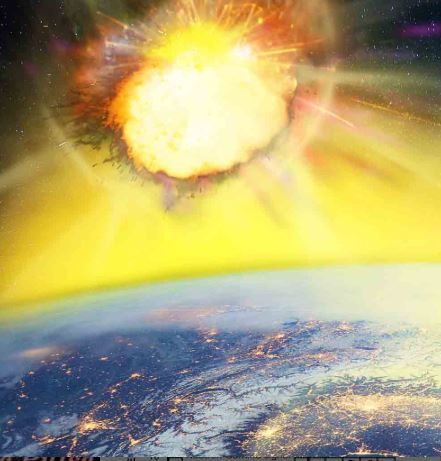
At such high altitude, no real effects on the ground, but being a broad-spectrum electromagnetic pulse it would be visible and to a casual observer, it might look like:
- A strange aurora
- A bright flash in the upper atmosphere
- A brief “starburst” in the sky
In the U.S. Nuclear Test Programme, Starfish Prime (detonated at 400 km altitude) was visible from Hawaii, 1,450 km away, and caused unanticipated electrical system failures, possibly the origin of the man made E.M.P. as a weapon.
So the first you may know of such an event is that the protection breakers in electrical transmission grids kick out, and that various of your personal electronic devices stop functioning as expected.
Susceptibility to E.M.P. is partially dependent on conductor length, so electrical transmission lines are prime candidates, devices with aerials such as radio and transmitters are next in line, but recent research has shown that a non-mains connected device such as a Smartphone, due to small conductor length and other on-board shielding is LESS susceptible than people think. It may stop working as a phone or internet device ( as the external providers fail) but your phone and the data on it MAY survive. (1. Institute for Security and Technology (IST) — Effects of Electromagnetic Pulses on Communication Infrastructure)
So what does that mean , in "Prepper" terms ?
Maybe it means this;
Your devices may still work , but may not communicate with external cells or networks.
They MAY not work at all , depending on their circumstances at the time of the E.M.P.
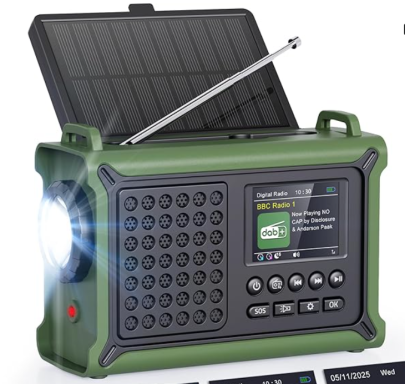
Communication is vital, and having a functioning radio (at the least) is an essential tool in an emergency.
Rather than depend on the E.M.P. resilience of your "My whole life is on my phone" philosophy, it MAY be better to buy a wind up radio, a Kindle device with useful information loaded onto it, and place the whole bundle in an E.M.P. shielded enclosure (Biscuit Tin)
Hint (1) - There will be more room for useful items if you eat the biscuits FIRST !
Hint (2) - A carefully selected stock of information in the form of a folder is TOTALLY impervious to E.M.P.
I
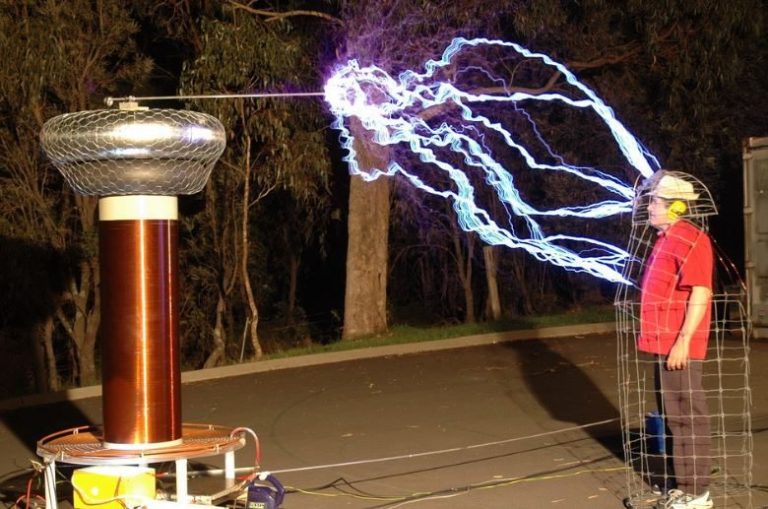
This is the usual way the function of an E.M.P. cage is illustrated, but it is wrong. E.M.P. is NOT a lightning strike, it is more complex than that, and a chicken wire cage will not protect sensitive electronic equipment. Which is where tin foil and biscuit tins come in handy.
The savvy Prepper would remove the biccies from the biscuit tin, and munch them with a nice cup of tea, while checking their preparedness, ability to administer emergency first aid and so on. With a few modifications the biccie tin becomes an E.M.P. "Vault" for small items like phones, radios etc.
For a lot more information on expedient E.M.P. protection a little further web browsing will give you what you need.
"Click Here, in the panel below will take you to such a site.
Or , Click Here for a very recent (2024) review of E.M.P resilience
Or Click Here for a very pretty biscuit tin, ideal for turning into an E.M.P. "Vault"

Beyond Blast and Fallout: The Long‑Term Atmospheric Effects of Nuclear War
There HAS to be a small section on these topics, because just when you think it can't get any worse, we are assured that it can.
Nuclear weapons are often imagined in terms of the immediate horrors: the blinding flash, the blast wave, and radioactive fallout. These are devastating enough. But a large‑scale nuclear exchange—especially one involving the United States and Russia—would unleash additional, long‑lasting effects on the global atmosphere and climate. These consequences would reach far beyond the war zone, threatening billions of people who survive the initial attacks.
Atmospheric Soot/Nuclear Winter
A large nuclear exchange would ignite hundreds or thousands of firestorms in cities and industrial areas. These fires would generate immense quantities of black carbon soot, which powerful updrafts would carry high into the upper atmosphere—far above the reach of rain.
Once there, the soot would spread around the globe and block a significant fraction of incoming sunlight.
What happens next
- Midday darkness: In heavily affected regions, sunlight could be reduced so severely that noon resembles deep twilight.
- Sharp global cooling: With less sunlight reaching the surface, global temperatures would fall by several degrees. Over land in the Northern Hemisphere, the cooling would be even more extreme.
- Agricultural collapse: Shorter growing seasons, reduced light, and frequent frosts would devastate crops. Even countries untouched by the war would face food shortages and famine.
- Duration: In large‑war scenarios, the cooling and dimming could last more than a decade.
Nuclear winter is not a metaphor. It is a physical consequence of cities, crops and forestation burning uncontrollably on a continental scale.
Nuclear Ozone Depletion: A World Exposed to Extreme UV
The same soot that darkens the surface also heats the stratosphere by absorbing sunlight. This heating disrupts atmospheric chemistry and accelerates reactions that destroy the ozone layer—the thin shield that protects life from harmful ultraviolet‑B (UV‑B) radiation.
The Ozone Layer is critical to a human population reliant on high crop yields and successful animal husbandry.
The sequence matters
- First 1–2 years: The soot layer is thickest. It blocks visible light and also reduces UV‑B at the surface.
- Years 2–7: The soot slowly thins, but the ozone layer is now severely damaged. With less ozone to absorb UV‑B, and less soot to block it, surface UV levels rise sharply.
- Years 7–15: Ozone recovers only gradually. UV‑B remains elevated for more than a decade.
Consequences of extreme UV
- Damage to DNA and photosynthetic systems in plants
- Injury to phytoplankton, the base of marine food webs
- Increased skin cancers, cataracts, and immune system effects in humans and animals
- Additional stress on already weakened ecosystems
In the largest scenarios, UV Index values in the tropics could exceed 35, far beyond anything in recorded history.
How Likely Are These Global Effects?
The most severe outcomes—full nuclear winter and extreme ozone depletion—require large‑scale use of nuclear weapons against cities, such as a U.S.–Russian exchange involving hundreds or thousands of warheads.
The good news
A deliberate, premeditated “empty the arsenals” attack is widely judged as unlikely. Both sides possess secure second‑strike forces, meaning no one can win such a war. Strategic planners understand that a full exchange would be suicidal.
The real risk
The danger lies in escalation:
- A limited nuclear strike used as a “warning”
- A retaliatory strike meant to be “proportional”
- Misinterpretation, panic, or loss of command control
- Pressure to escalate when the war does not end after the first use
History shows that wars rarely unfold as planned.
Once the nuclear threshold is crossed, the risk of uncontrolled escalation rises sharply.
Smaller wars still matter
Even a regional nuclear conflict—far smaller than a U.S.–Russian exchange—could inject enough soot to cool the climate and damage the ozone layer, though less severely.
Is Prepping Even Worth It? A Realistic Answer
After looking honestly at the long‑term atmospheric effects of a large nuclear exchange—nuclear winter, global cooling, and years of elevated ultraviolet radiation—it’s natural to ask a blunt question:
If the worst happens, is there any point preparing at all?
It’s a fair question. A full‑scale U.S.–Russian nuclear war would be a civilisation‑shaking event. No amount of tinned food in a cupboard can “solve” a decade of failed harvests or a shredded ozone layer.
But here is the crucial point:
The most extreme scenarios are not the most likely ones. The most useful preparedness is for the far more common, far more survivable disruptions.
Even in a world with nuclear weapons, the overwhelming majority of crises people actually face are not apocalyptic. They are sudden, local, and temporary—yet still dangerous if you’re unprepared.
Why Preparedness Still Matters
1. Most real emergencies are not nuclear wars
The events most likely to disrupt daily life are things like:
- Cyberattacks on infrastructure
- Power grid failures
- Fuel shortages
- Supply‑chain breakdowns
- Severe storms or flooding
- Industrial accidents
- Conventional or asymmetric conflict
- A limited tactical nuclear strike far from your region
These are serious, but they are not civilisation‑ending. In all of them, basic preparedness saves lives.
2. The classic advice still works
The old civil‑preparedness guidance—simple, inexpensive, and achievable—remains relevant:
- Torch / flashlight
- Battery or wind‑up radio
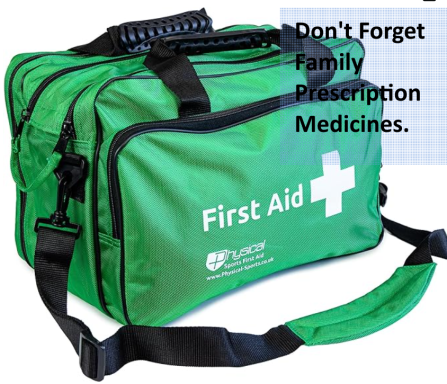
- First‑aid kit
- Water containers
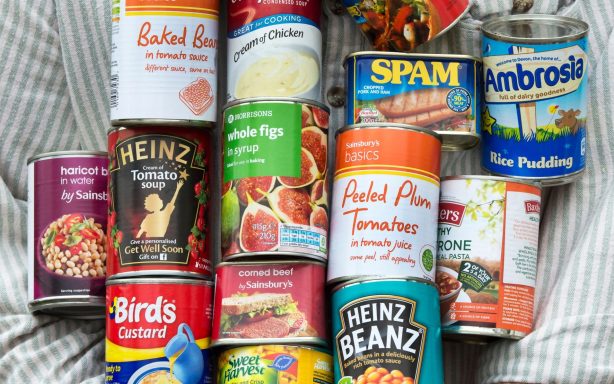
- A few weeks of food
3. Preparedness is not about surviving the apocalypse—it’s about reducing vulnerability
ordinary people with ordinary supplies cope far better than those with nothing.
The Honest Bottom Line
If the absolute worst‑case nuclear winter scenario occurred, no household could prepare its way out of it. But the vast majority of crises we are likely to face are NOT that scenario.
Preparedness is worthwhile because:
- It protects you in the emergencies that actually happen.
- It reduces strain on emergency services.
- It gives you options when systems fail.
- It builds resilience in your household and community.
Preparedness is not pessimism. It is practical precaution for yourself, your family, and maybe even your neighbours.