Water
Torch
Radio
Food
Is that it ?
I think I've got all those rattling around somewhere already !
(Hmm, must check sometime, but not today, maybe tomorrow or whatever)
🧠 “The Best Prepper Kit Is the One Between Your Ears”
Prepping isn’t just stacking tins in a cupboard or buying the latest bit of kit — half the battle is simply knowing what to do, when to do it, and why. A quiet hour with a cup of tea, a biscuit, and a bit of reading or research often does more for your resilience than another packet of pasta.
Understanding how things work, how people react, and how to stay calm when life gets wobbly is the real long‑term supply. Tools can be lost, batteries go flat, and stockpiles run down, but knowledge travels lightly and doesn’t expire. In the end, the most reliable piece of equipment you’ll ever carry is the one you’re using to read this.
Emergency First Aid and Food Supplies
FIRST AID AND MEDICAL
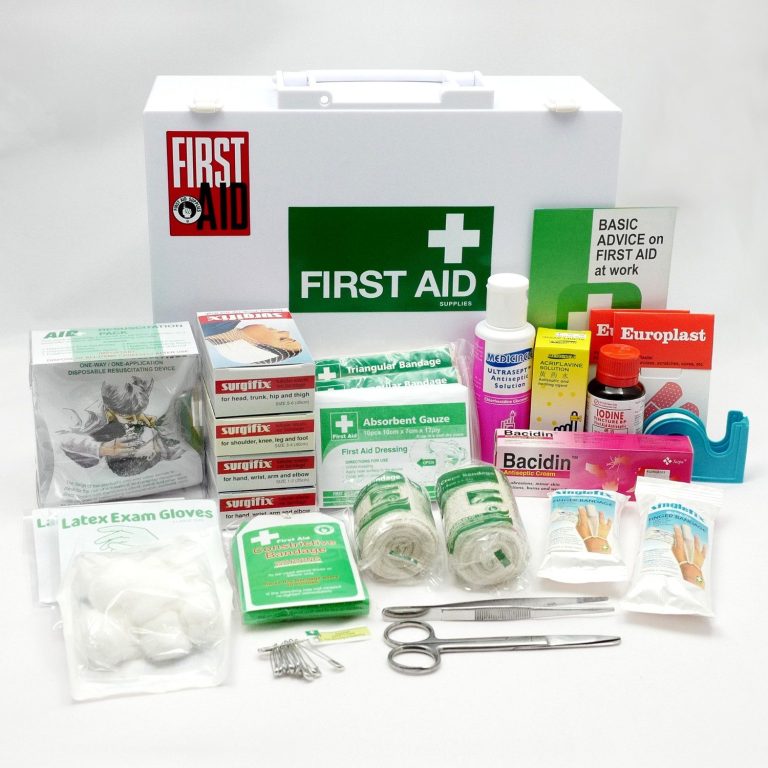
There are many ready prepared first aid kits and even rucksacks, of varying degrees of completeness for all sorts of emergency first aid requirements.
A full "Emergency" kit should include any prescription medicines which any family member may require, but in the U.K. this would be difficult.
🔴 4. What the NHS will not allow
These requests will almost always be refused:
“Can I have an extra month to build a stockpile?”
“Can you double my prescription so I have a reserve?”
“Can I have a backup set of everything?”
GPs are audited on prescribing, so they simply can’t do this.
For some ideas on how to build up a suitable Medical Kit, more comprehensive than the usual home first aid kit, here are two reputable sources specific to the U.K.
🟢 St John Ambulance – “What to put in a first aid kit”
Official page: https://www.sja.org.uk/get-advice/i-need-to-know/what-to-put-in-a-first-aid-kit/ Source: St John Ambulance
What they recommend (summary)
St John Ambulance provides the most detailed public list in the U.K., including:
Sterile wound dressings
Eye pads
Assorted plasters
Roller bandages (conforming, open‑weave, support, self‑adhesive)
Triangular bandages
Tubular bandages
Safety pins
Disposable gloves
Cleansing wipes
Low‑adherent dressings
Burn dressings
Scissors
In addition to that a supply of non-prescription painkillers and other over the counter medicines such as :
🧭 1 British Mountaineering Council (BMC) – Expedition Medical Kit Advice
Painkillers (paracetamol, ibuprofen, aspirin)
Anti‑diarrhoeal medication
Antihistamines
Rehydration salts
Antacid tablets
Emollients
Anti‑nausea medication
This is widely used by UK outdoor groups and is considered semi‑official.


Survivalists and Preppers
If you are unfamiliar with the terms, there IS a difference, and my prejudices will be clearly revealed.
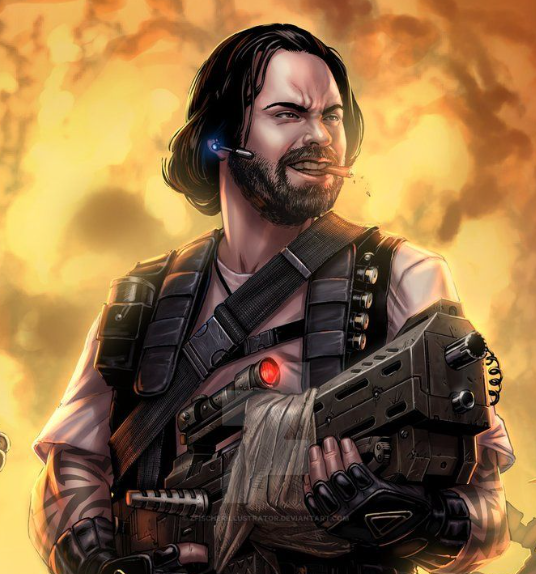
Survivalist
Who needs to buy and lovingly store provisions like food and torches, batteries etc when you've got guns and knives ?
And even MORE guns and even BIGGER knives.
If your first port of call for emergency provisions is your local weapons shop, then you are a survivalist.
Preppers
Preppers are NOT survivalists. They do not intend to forage for sustenance by stealing other peoples stuff, or killing and eating them.
A Prepper has PREPARED, by building up a store of their own necessities, after which they intend to stay out of the way and mind their own business.
If your first Port of Call for emergency provisions is your local supermarket, then you are a Prepper.

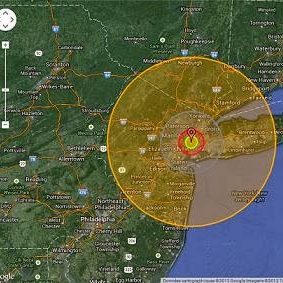
Nukemap
Nuking Yourself Can Be FUN !!
No, seriously. We live in an age where computer simulations are available for just about ANYTHING, including nuking yourself.
SO, having read Glasstone and Dolan , Kearny and at least a synopsis of Hackett, you have some idea of what may be involved generally. But what about the specifics, what about YOU ?
“Nukemap” is a tool based on Glasstone and Dolan , and is WELL worth getting to know better.
Get a cup of coffee, and some biccies (chocolate ones are best) and snuggle down in your favourite chair while you unleash Nuclear Hell on yourself !
Survivalists and Preppers II
Many people confuse the two, which is totally unfair. Think of it like this - if everyone was a Prepper, they would have their own supplies and no need to prey on anyone else.
If everyone were a Survivalist, they would all end up trying to prey on each other - what would THAT look like ?

Survivalist
NOOO !! You can't eat THAT !
Sorry mate, it may have cost you a LOT of money, but here in the U.K. it's illegal to own one anyway.
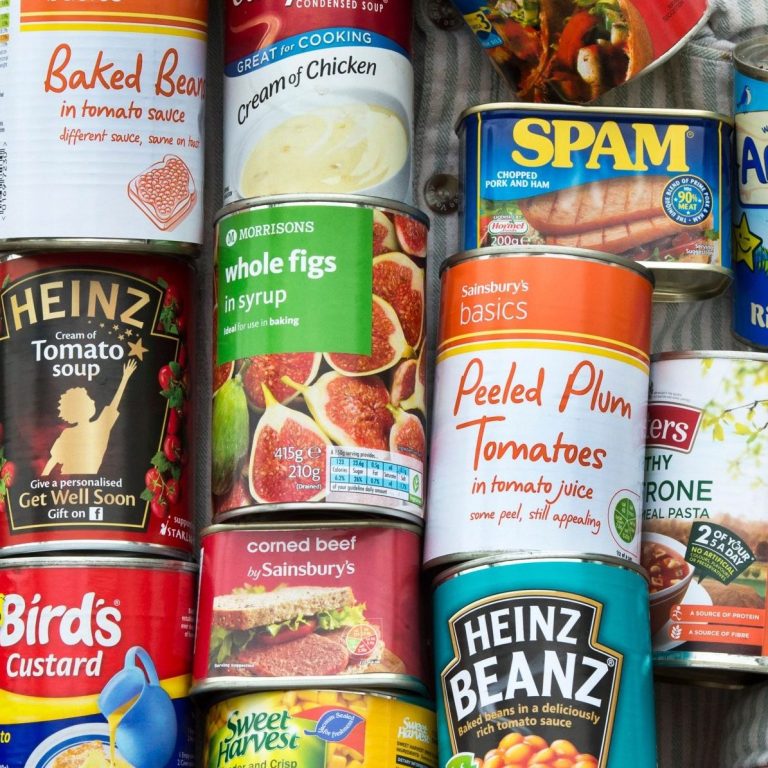
The key to survival, (or one of them) , is FOOD.
Another one is SHELTER. So would it not be safer to shelter and rely on your food stocks rather than go out hunting for food ?
Nice comfy chair though, are you SURE your a Survivalist, Hmm?
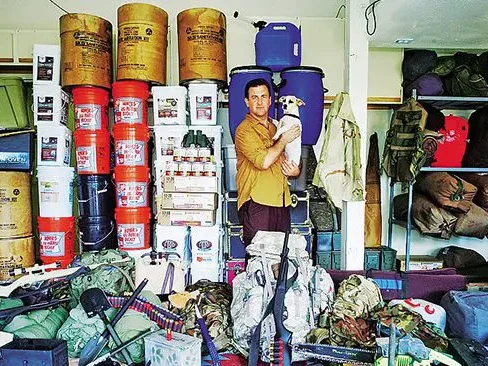
Preppers
Are you going to eat all THAT ??
Lots of food for the little doggy too I hope.
This guy is taking it REALLY seriously, with all those bulk items. In terms of packing density bulk is better. But it is still surprising how many smaller items you can pack into a small space.
Thirty days worth of food can be stored in the lower shelf of ONE 600mm kitchen base unit.
So which one are YOU ?
You may already know - or not. The Q and A's below will help you find out.
A quick test, just to help you decide.
You have some tins of cat food left, and that's all. Yep, it's finally come to this.
Do you;
a)Eat the cat food.
b) “I'd rather DIE before I'd eat cat food !”
c) Use it as bait for some cunningly wrought traps, catch some cats then eat THEM.
If you answered a) : You are a Prepper, but a rather half-hearted one – how come you end up eating cat food ?
If you answered b) : More “Preppie” than Prepper. Would you eat it if you had a nice bottle of Chardonnay to wash it down with ?.
If you answered c) : Yep, you're a Survivalist alright, and a darned mean one at that.
Would you use the pelts to make a Davy Crockett style hat and maybe some mittens ? I'll bet you would – You're a DISGRACE ! (Nice and warm in the winter though)
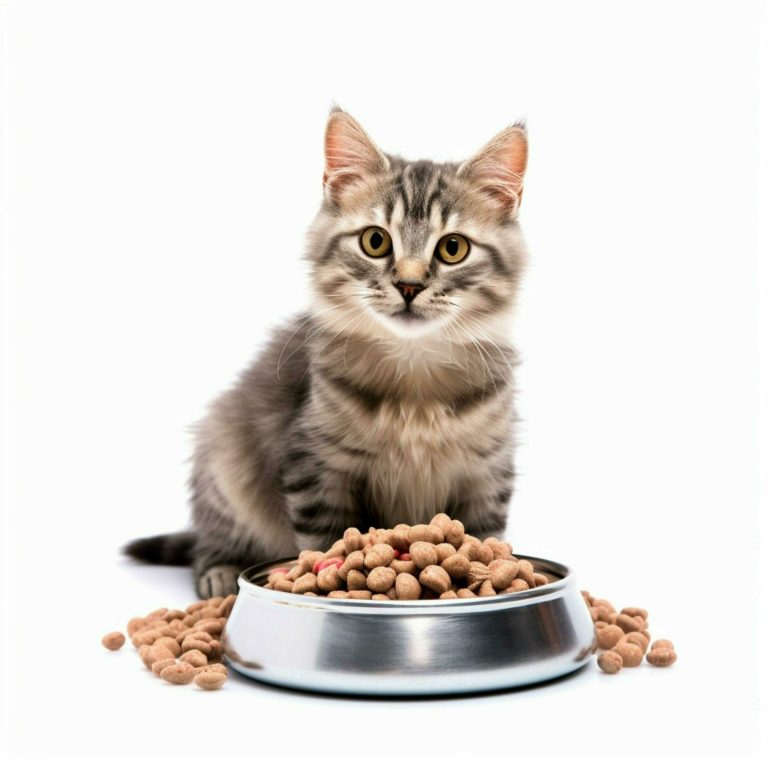
How COULD You !!
Prepper ,Hoarder or just plain crazy– How do you know ?
Answer these simple questions (Truthfully mind !) and you can discover your secret inner self.
1) Is the only tinned food you have in your larder a family heirloom tin of Ye Olde Oake Hamme you got twenty years ago when your Granny passed on ? (Yes/No)
2) When you go to the supermarket because you've run out of beans , do you get ONE tin or THREE tins ? (Yes/No)
3) Is your larder stocked with nicely arranged tins, in alphabetical order , Left to Right, and you rotate stock in order of sell by date . (Yes/No)
ANSWERS
Question 1) If you answered “Yes” then all is not lost. You have room in your larder for loads of other stuff, and your treasured heirloom can from Granny get pride of place on the mantelpiece.
Tinned food can last for YEARS – (Wouldn't trust twenty year old ham though)
Question 2) If you answered “One ” then you could consider getting more and keeping the others for emergencies. Once built up, provided you like beans, you just rotate the stock. If you answered “Three” then you are a prepper, or like beans – a LOT.
Question 3) If you answered “Yes”, you are either working in a supermarket warehouse , are on an Antarctic Base or you already a Prepper.
If you answered “No” , at least it proves you do not have Obsessive Compulsive Disorder.
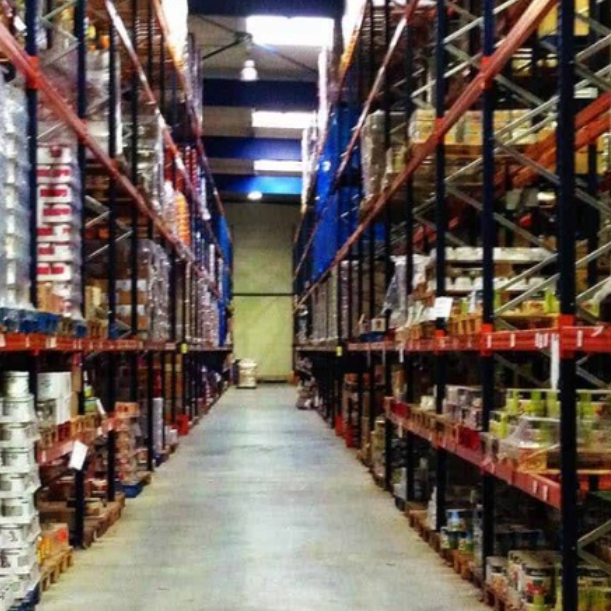
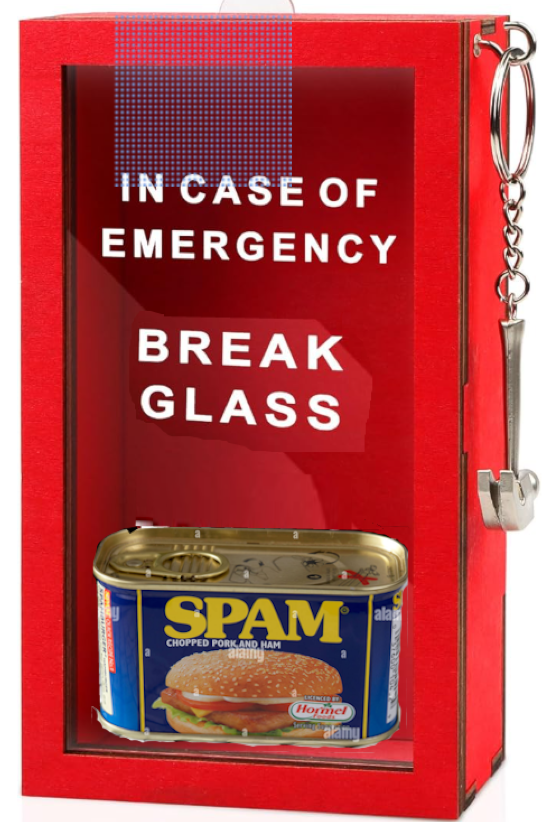
It is a well known fact (among Non-Preppers) that "Preppers" have a secret hoard which looks exactly like THIS.
A "Management" idea of Prepping. (But the paperwork cost a FORTUNE !
The Bare (Bear ?) Necessities
In the U.K. we take THREE things for granted which really we shouldn't . Water , Power and Sanitation.
How would THEY fare in a local, regional or even national emergency, and what could YOU do about it ?

Bears know how it's done.
And so do most other non-human creatures. Even some humans can survive , or even thrive, in conditions which would see a U.K. resident dead in a week, if not less.
We in the U.K. rely strongly on what we call "services" or "Infrastructure"
Water , Power, and Sanitation. Could they stop working, just like that ? What do we do then ?
Some, if not MANY , in the U.K. already know the answer to that one.
- National strikes (Civil Action)
- Weather events
- Unforeseen circumstances.
ALL the above have seen a "D.O.S." (Denial of Service) situation where U.K. residents are deprived of the the things they take for granted.

U.K. Culture is a Dependency Culture
Consider the subsistence farmers and hunter gatherers. Their life is hard and often short, but they have a level of self sufficiency which we in the U.K. have happily given away in an economic exchange.
We pay others to deal with the water , power and sanitation requirements because we either cannot do it ourselves, don't know how to do it ourselves, or just plain don't want to.
We are dependent on them, and the often complex machines and systems they operate on OUR behalf.
How are we supposed to :
- Arrange our own heat and light sources
- Arrange our own water supply .
- Deal with our own biological waste and rubbish ?

Is it even possible to survive ?
I don't know.
- Survive what ?
- ?
- How long for ?
- ?
- How localised ?
- ?
- Is anyone in a position to help ?
- ?
- When does the cavalry arrive ?
- ?
- Does ANYONE know how to deal with it and help me ?
These are questions which need to be addressed, and may have to be addressed at an individual or household level.
If "something happens" your planning and resilience may mean that you and your family can :
- Suffer less inconvenience
- Help others
- Survive
Tagline
Water - A difficult situation
Few of us in the U.K. have experienced a situation where we have NO access to water, yet it is a necessity for life .
Without water , humans cannot survive , and without even more water , lack of sanitation becomes a similar life-threatening situation.
So - How do YOU survive ?
This is one of the big mysteries in U.K. government advice - three days of your own bottled water supply , then - what ?
How much water SHOULD you have on hand, and , more importantly, if it isn't coming out of the tap, where can you get some more ?
This is where it gets difficult - if the reason your water supply has failed is a "Denial of Service" attack, whether cyber or sabotage, three days sounds reasonable. But how much is three days worth of water ?
In Northern Latitudes , such as the U.K. a sustainable minimum is 1.5 to 2.0 liters of water per day , total water intake.
In the U.K. it may be possible to survive without serious organ damage or death without ANY water intake, whether liquid or incorporated into food , for three to five days.
After that, organ failure and death become very real possibilities.
So , three days of minimal water per person. (1.5 liters times = 4.5 liters) plus say 5 days without water at all.
In a week, the situation is life threatening, so what happens now ?
This is one of the difficulties, and , maybe, one of the myths of a "Prepping" situation. Where are you going to get a water supply from, which is
- safe to drink ?
- adequate to your needs ?
- Available in the long term
That is a BIG ask in an emergency situation. So what CAN you do ?
First thing is to conclude that a few bottles of water is NOT enough. If given ANY advanced warning, or even a suspicion of advanced warning, fill any and every container capable of holding water which you can find.
Bathtubs, buckets, pots. pans, anything, including Wheelie Bins (Explanation later).
Even bin liners can hold water , and a roll of 25 supermarket grade bin liners will hold , with no problems 15 liters each AND leave enough room to double twist and knot the top. (See later)
That will add days or maybe even weeks to your basic survival requirements, but what then ?
The main focus of "Prepping" (though not the only one) , is a nuclear exchange of some sort, close to where they live. Close enough to disrupt ALL "essentail services" including water and power supplies.
People CAN live without electrical power, and did so for millennia, but cannot live without water.
To make things worse, in the absence of a cast-iron guaranteed safe water supply, biologically contaminated water is potentially hazardous to short term and long term health - even lethal , and that is without any additional radiation hazard.
So how DO you purify whatever water supply you have managed to obtain ?
Most of the literature advises ;
- Settling time
- Filtration
- Sterilisation
Settlling time is critical, decant the water into another vessel AFTER the major impurities have had time to fall to the bottom or rise to the top.
The water should then be filtered , even towelling and a sand bed filter will do.
The water must then be sterilised, to destroy any microorganisms remaining.
Boiling of water for drinking is strongly recommended, if a heat source is available. Boiling kills everything including bacteria and parasites, and disrupts viruses too.
The easier alternative is either specific water sterilsation tablets or common household bleach.
Not the scented or thickened variety, just "Basics" range supermarket bleach.
Sodium hypochlorite (NaOCl)
Typically 3–5% concentration is recommended by many health agencies and does NOT make your drinking water taste like a swimming pool.
So part of a "Prepper Kit" should include budget range supermarket bleach - one liter of 5% hypochlorite domestic bleach will reliably purify 5000 liters of water, but action time is required. Better to allow 5 drops of 5% bleach per liter,in small quantiities, with an action time of 30 minutes before considering it "safe".
One thing seems certain, that EVERY household should have a means of rendering water biologically safe, whether sterilisation tablets or the "Bush Fix" of measuring hypochlorite bleach .
As for radiological contaminants, a sand and gravel filter is better than nothing.
Safe, clean tap water, always available. (Right up to the moment it isn't ?.)
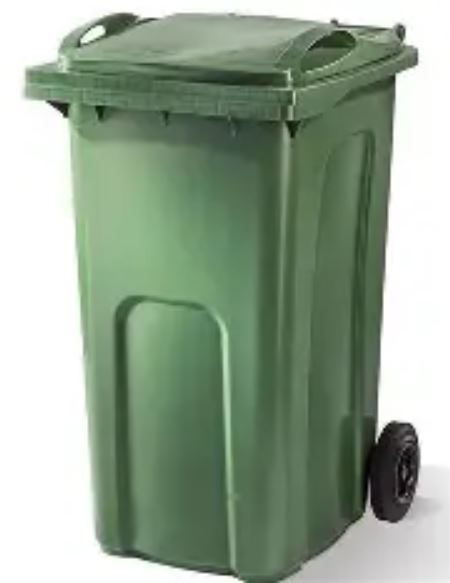
Council Issue wheelie bin, 120 l to 240l. Food grade liners bin liners are available for all sizes - hmmm.
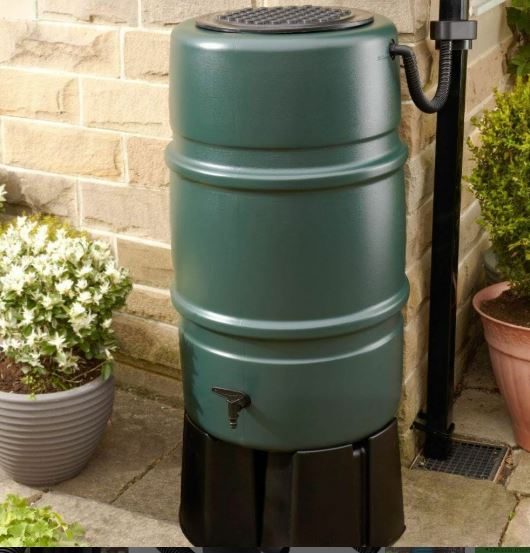
The gardener's friend - a water butt with diverter from the roof guttering. Sizes vary.
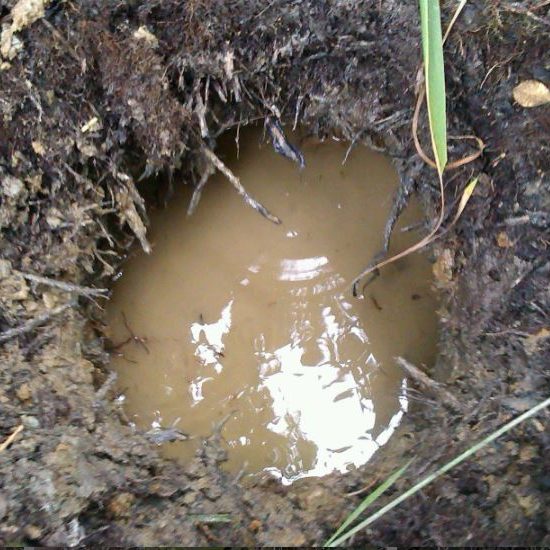
A photograph of a "Ground Well" from a backwoods survival website.
Surely they CANNOT be serious ? Well they are - the process by which this muck is filtered and rendered safe to drink is explained on various "BushCraft" websites.
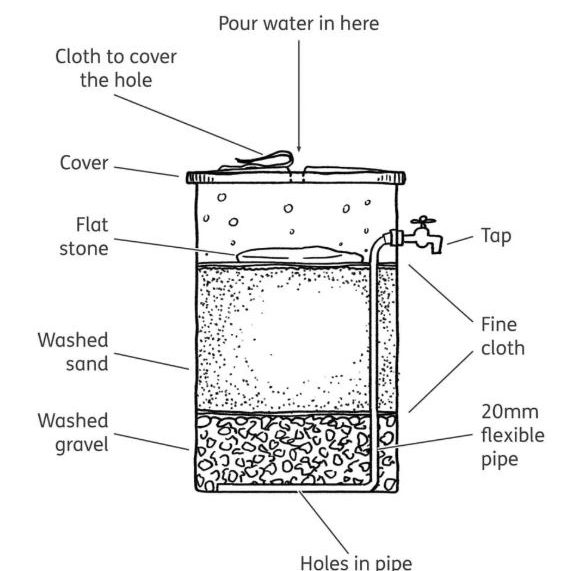
Just one of many diagrams of how to construct a sand and gravel "Bucket" Filter.
This is an especially good design because it will NOT dispense water unless the filter is fully saturated. Can you see why ?
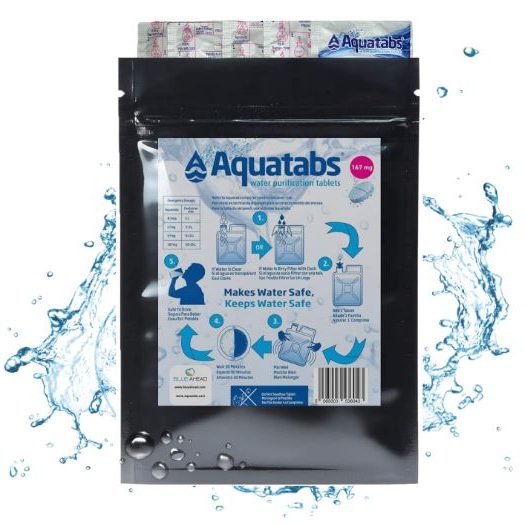
As used by expeditions, aid agencies and other emergency workers, water purification tablets last for five years at FULL effectiveness and if used properly will remove any micro- biological threats to health from water.